
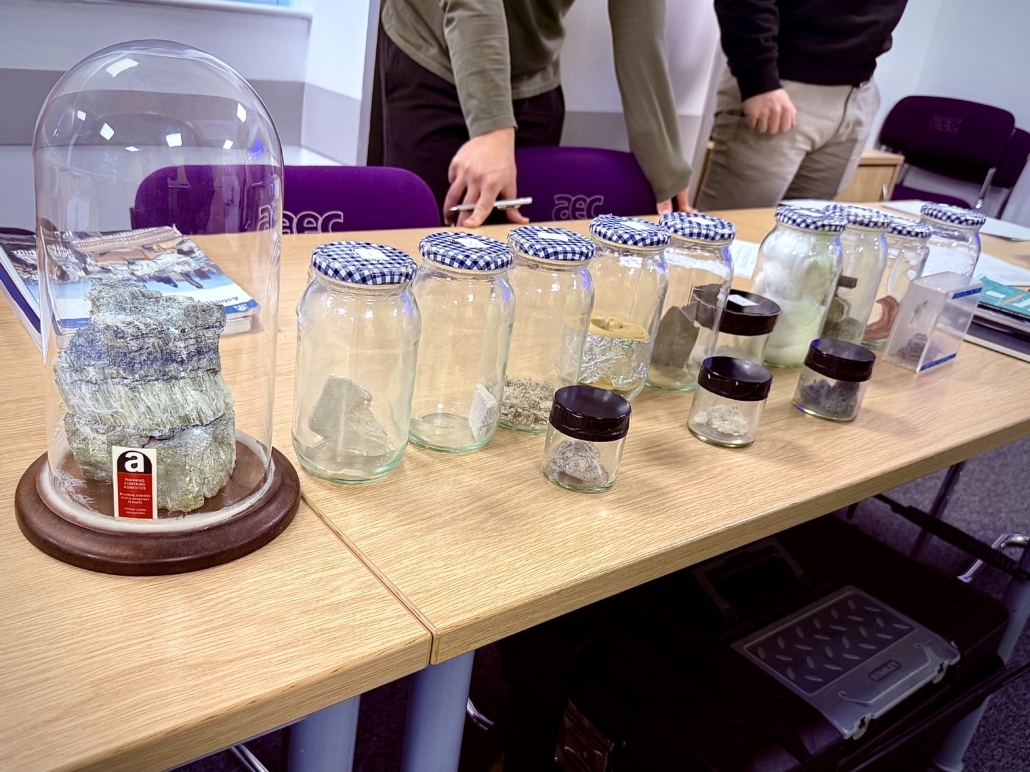
Asbestos in Homes: A Homebuyer’s Guide to RICS Surveys and Asbestos Risk
What suspected asbestos in a survey report really means, where it is commonly found, and when further investigation is sensible.
Key takeaways
- Not all asbestos-containing materials present the same level of risk.
- Any home built or refurbished before 2000 should be treated as potentially containing asbestos-containing materials (ACMs).
- A RICS Home Survey can flag materials that may contain asbestos, but it does not confirm asbestos through sampling or laboratory testing.
- Condition, friability and the likelihood of disturbance are central to assessing practical risk.
- A specialist asbestos survey is particularly important where suspected materials are damaged or refurbishment is planned.
Why the word “asbestos” causes more alarm than it should
Few things make homebuyers more nervous than seeing the word asbestos in a survey report. That reaction is understandable, but the suspected presence of asbestos-containing material does not automatically mean a property is unsafe, unmortgageable or a bad purchase.
In many homes, the issue is one of identification, condition and future management rather than immediate removal. The value of a professional survey is to put the observation into context: what the material might be, whether it appears damaged, how likely it is to be disturbed, and what sensible next step should follow.
The important question is rarely simply “is there asbestos?” It is “what is the material, what condition is it in, and what are you planning to do with the building?”
What is asbestos, and why was it used?
Asbestos is a naturally occurring group of mineral fibres that was widely incorporated into building products because of its strength, heat resistance and insulating properties.
It was used extensively in UK buildings throughout much of the twentieth century. The use of blue asbestos, or crocidolite, and brown asbestos, or amosite, was prohibited earlier, with the final UK ban, including white asbestos or chrysotile, coming into force in 1999.
The three names homebuyers most often encounter are:
- Chrysotile – commonly referred to as white asbestos.
- Amosite – commonly referred to as brown asbestos.
- Crocidolite – commonly referred to as blue asbestos.
All asbestos types can be hazardous when fibres are released into the air and inhaled. Practical risk, however, varies significantly depending on the product, its condition, how firmly the fibres are bound into the material and whether it is likely to be disturbed.
Where is asbestos commonly found in homes?
Asbestos was used in a surprisingly wide range of building products. A surveyor will therefore consider the age of the property, previous alterations and the appearance and location of potentially suspect materials.
Common examples include:
- Asbestos cement garage and outbuilding roof sheets.
- Soffits, fascia boards and some external panels.
- Older gutters and rainwater downpipes.
- Textured decorative coatings to ceilings and walls.
- Vinyl floor tiles and some bitumen-based adhesives.
- Boxing around pipes, service ducts and boiler cupboards.
- Asbestos insulating board (AIB) in certain ceilings, partitions and panels.
- Some older electrical backing panels and fuse-board components.
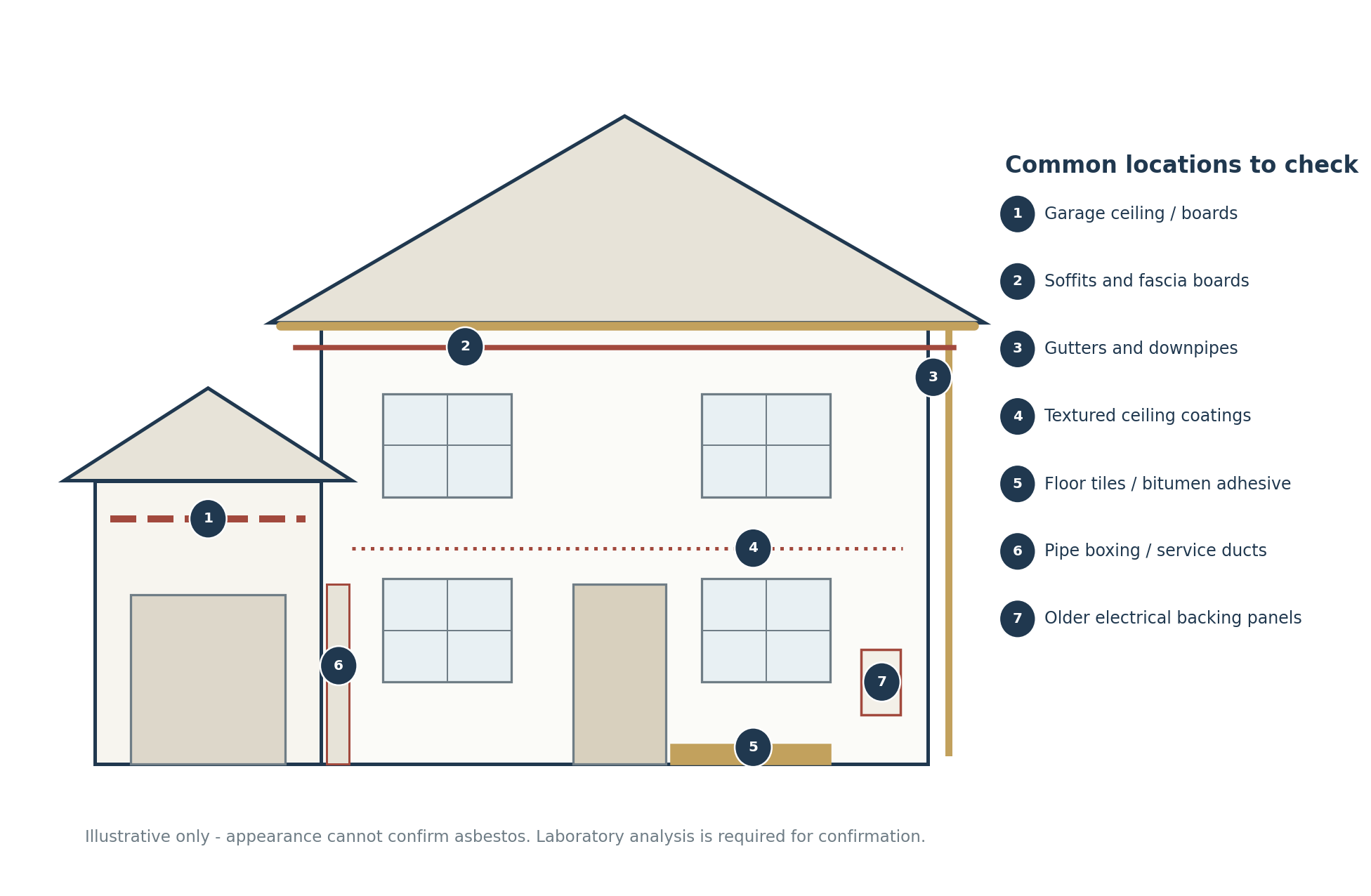
Important: not every material in these locations contains asbestos. Many asbestos and non-asbestos products are visually very similar, so laboratory analysis is required for confirmation.
Should asbestos be managed, encapsulated or removed?
Finding suspected asbestos does not automatically mean it should be removed.
Health and Safety Executive guidance recognises that asbestos-containing materials in good condition can often be managed in place, provided they are unlikely to be damaged or disturbed.
Depending on the material and the circumstances, management might include:
- Recording its location.
- Monitoring its condition.
- Protecting it from damage.
- Enclosing it.
- Encapsulating or sealing the surface.
Removal becomes more likely where material is damaged, deteriorating, vulnerable to impact or where planned works will disturb it.
The correct approach depends on the specific asbestos-containing material and the proposed work. Certain types of asbestos removal work must be carried out by an HSE-licensed contractor.
What does a RICS Home Survey tell you about asbestos?
A RICS Level 2 Home Survey or Level 3 Building Survey is not an asbestos survey.
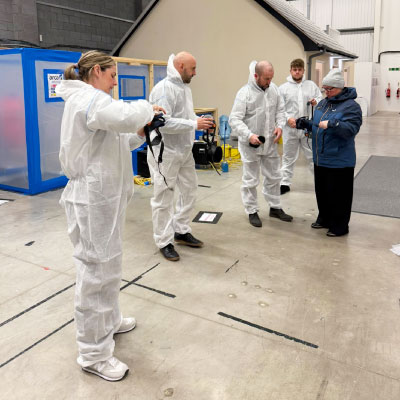
During the inspection, however, the surveyor should draw attention to materials that appear capable of containing asbestos where that possibility is identified, comment on their relevant condition and advise when specialist investigation is appropriate.
The surveyor does not normally take samples or confirm the material through laboratory analysis.
If confirmation is required, a competent asbestos surveyor can inspect the material and, where appropriate, arrange representative sampling and laboratory analysis.
Where substantial refurbishment or demolition is planned, the asbestos investigation needs to be appropriate to those works and sufficiently intrusive to identify materials that might otherwise be hidden within the building fabric.
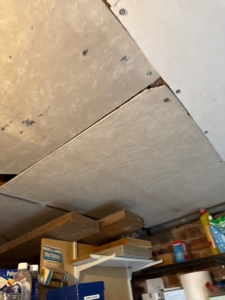
Real examples from residential building surveys
Case study 1: damaged garage ceiling board in Poynton
During a recent Level 2 Home Survey in Poynton, we noted damage to a fibrous board fixed to the ceiling of an integral garage.
The exposed edge had a texture consistent with asbestos insulating board (AIB), a material capable of releasing fibres more readily than asbestos cement when damaged or disturbed.
We recommended specialist asbestos investigation before exchange.
Laboratory analysis subsequently confirmed that the material contained asbestos. Once the buyer had the specialist report and quotations for safe removal, they were able to renegotiate the purchase price from an informed position.
This is a good example of why context matters. It was not simply the possible presence of asbestos that was relevant; the material was already damaged and was of a type that warranted further investigation.
Case study 2: asbestos cement gutters and downpipes
On another residential survey, the original gutters and rainwater downpipes appeared consistent with asbestos cement.
The owner, who had lived at the property for many years, was genuinely surprised that the materials might contain asbestos.
The components were in reasonable condition and there was no indication that urgent removal was required.
The important outcome was clarity. The purchaser knew what was likely to be present, could avoid unnecessary disturbance and could budget for eventual replacement when appropriate.
Asbestos myths versus facts
Myth: All asbestos is equally dangerous
Fact: Risk varies considerably depending on the material type, its condition, how easily fibres can be released and the likelihood of it being disturbed.
Myth: All asbestos must be removed immediately
Fact: Materials that are in good condition can often be safely managed in place rather than automatically removed.
Myth: A home survey confirms whether asbestos is present
Fact: A RICS Home Survey can identify materials that are suspected of containing asbestos. Confirmation normally requires specialist sampling and laboratory analysis.
Myth: Asbestos cement and asbestos insulating board are basically the same
Fact: They are very different products. In asbestos cement the fibres are strongly bonded into the cement matrix. Asbestos insulating board is considerably more friable and can present a greater fibre-release risk if it is damaged or disturbed.
Frequently asked questions about asbestos when buying a house
Is asbestos always dangerous?
No. The health hazard arises when respirable asbestos fibres are released into the air and inhaled.
A bonded asbestos product in sound condition and left undisturbed can present a very different practical risk from damaged or friable asbestos insulation board.
Should asbestos stop me from buying a house?
Not in most cases.
The important points are understanding what material is suspected, its condition, whether specialist confirmation is justified and whether any refurbishment you are planning is likely to disturb it.
Once those points are understood, any likely costs can be factored into your purchasing decision.
Can a surveyor tell whether something contains asbestos just by looking?
Often not with certainty.
An experienced Chartered Surveyor can recognise materials, construction periods and locations that are consistent with known asbestos-containing materials, but many asbestos-containing and asbestos-free products look virtually identical.
Laboratory analysis is the normal route to definitive confirmation.
When should I obtain a specialist asbestos survey?
Specialist investigation is sensible where:
- Suspected asbestos-containing materials are damaged.
- The identity of the material could materially affect your purchase decision.
- You are planning substantial refurbishment.
- Building work will involve drilling, cutting, stripping out or disturbing the existing fabric.
- Demolition work is proposed.
For work involving buildings constructed before 2000, asbestos risk should be considered before intrusive works commence.
What if the suspected asbestos is in good condition?
It may be entirely appropriate to leave it in place and manage it, provided it is unlikely to be disturbed.
Future owners and contractors should know where the material is located so that it is not accidentally drilled, cut, sanded or broken.
Before you exchange contracts: five practical questions
- What material has the surveyor identified as potentially containing asbestos?
- Is it intact and well sealed, or is it damaged, exposed or deteriorating?
- Will your planned refurbishment, rewiring, plumbing or extension works disturb it?
- Do you need specialist confirmation before exchange to understand the potential cost or negotiate appropriately?
- If the material remains in place, how will its location be recorded and communicated to future contractors?
Ask a Chartered Surveyor
If you are buying a home built or altered before 2000 and want a calm, pragmatic view of suspected asbestos, speak to a Chartered Surveyor before you commit.
A short conversation early in the purchasing process can help distinguish between an item that simply requires future management and something that warrants specialist investigation before exchange.
Book a Level 2 or Level 3 RICS Home Survey
For clear, practical advice on asbestos and all aspects of property condition, book a Level 2 Home Survey or Level 3 Building Survey with Hogbens Chartered Surveyors.
We will help you understand survey findings in context so you can make an informed decision and move forward with confidence.
Visit: hogbens.co.uk
For official asbestos guidance, refer to the Health and Safety Executive’s asbestos information and current RICS guidance.


